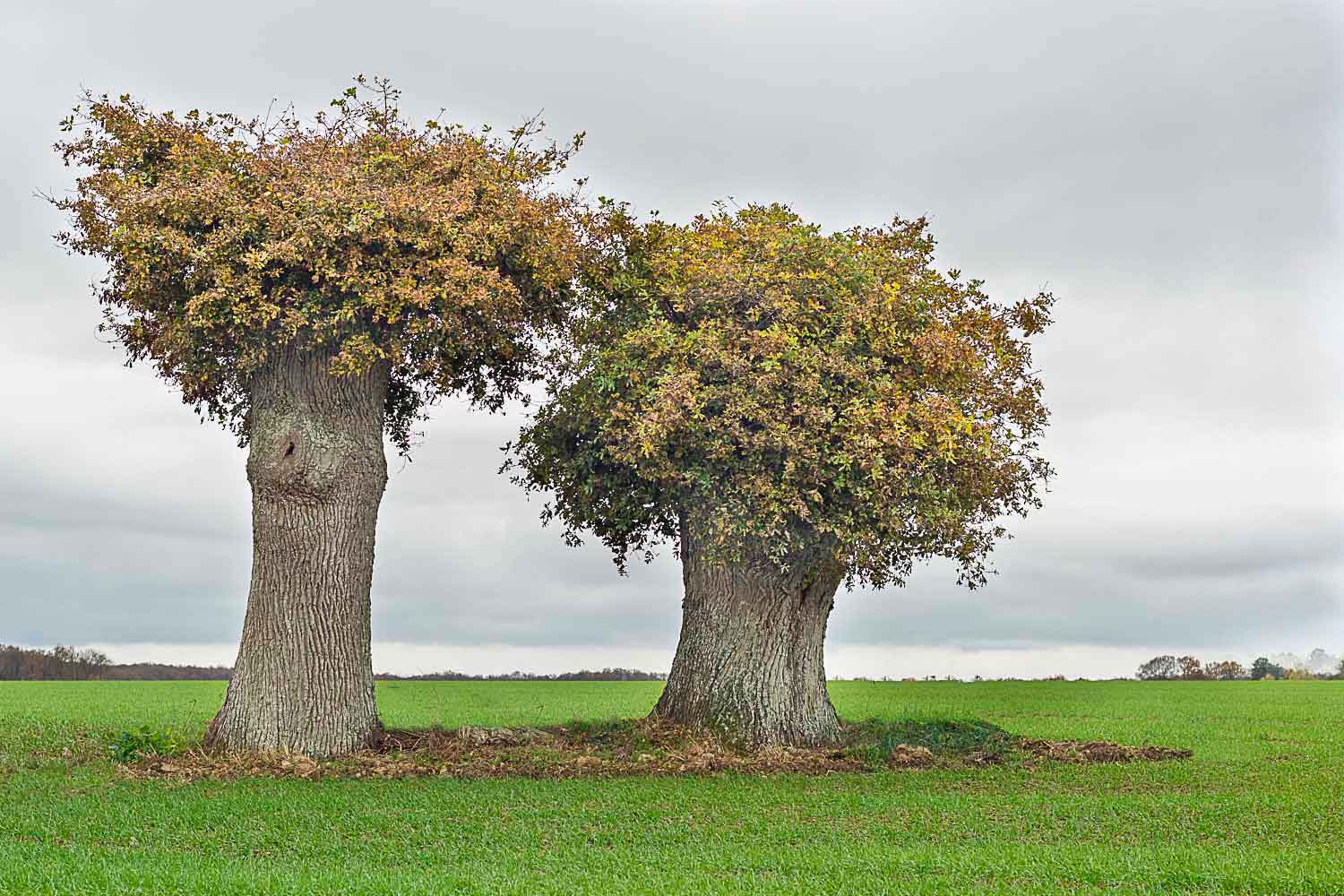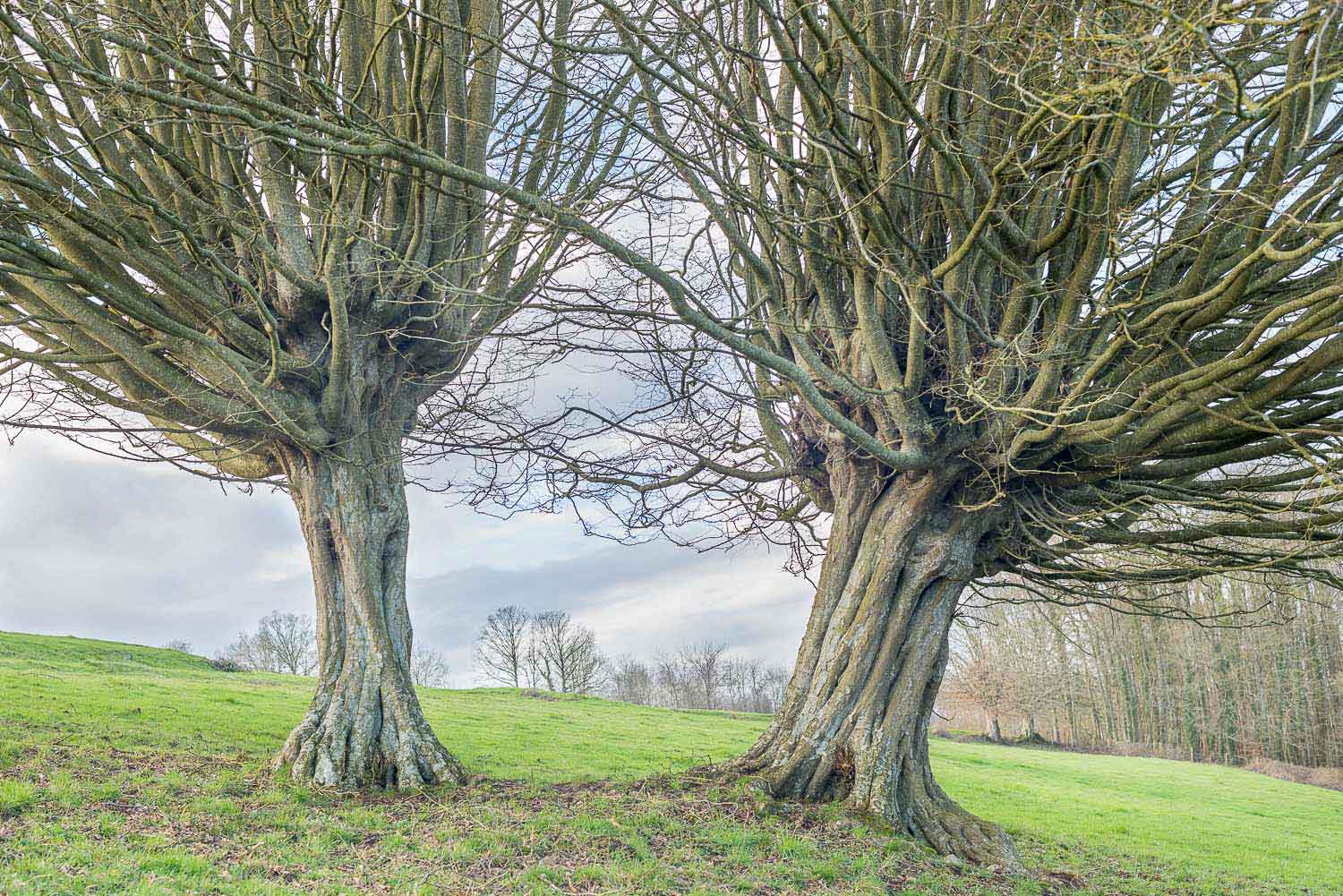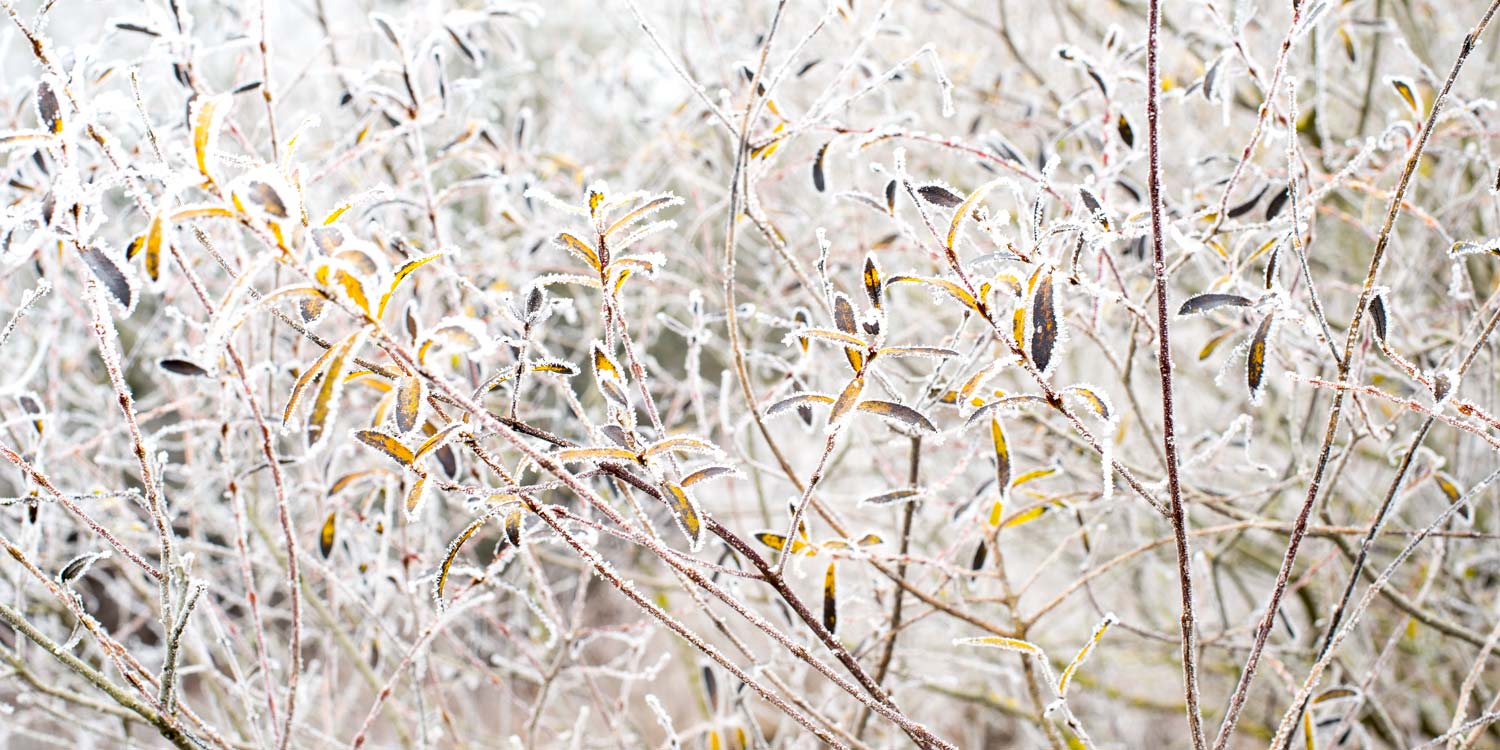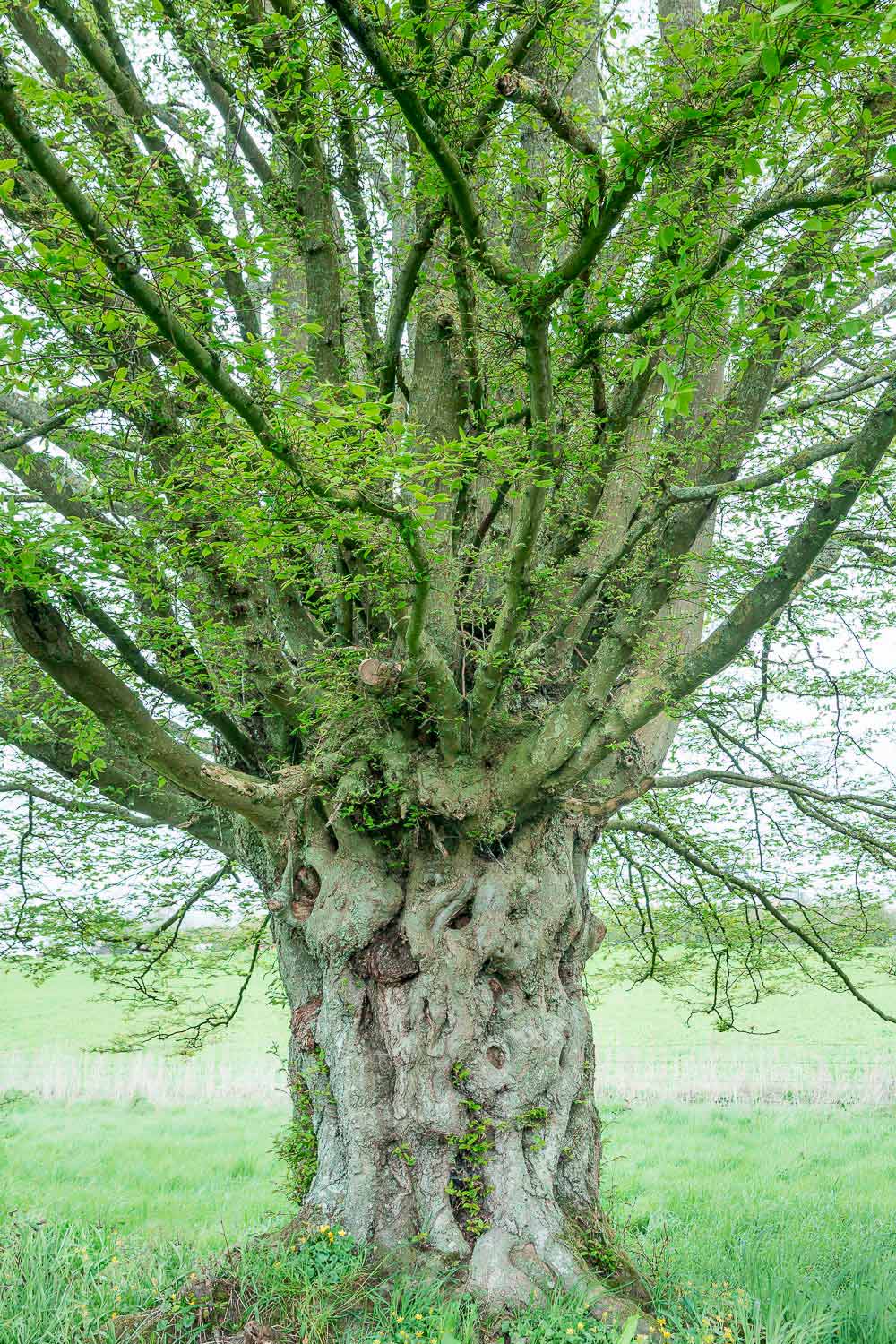
Arbre écorné, chapoule, escoup, moussard, ragosse, têtard… These are just some of the many names used for these trees of the countryside, shaped by human hands. More than 250 different names have been recorded to describe them. In the Perche Vendômois, they are known as trognes. All the photographs presented in this article were taken in this region. However, these trees, shaped by traditional human practices, can be found in many parts of Europe and on other continents, particularly in Asia, Africa and South America.
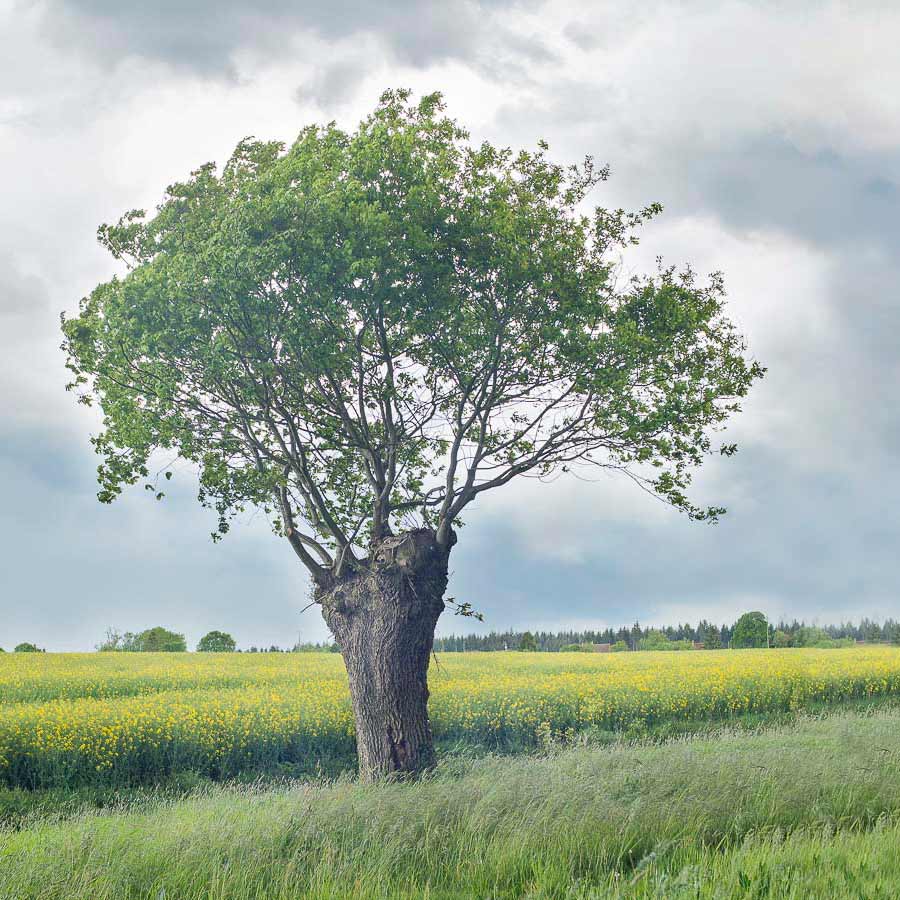
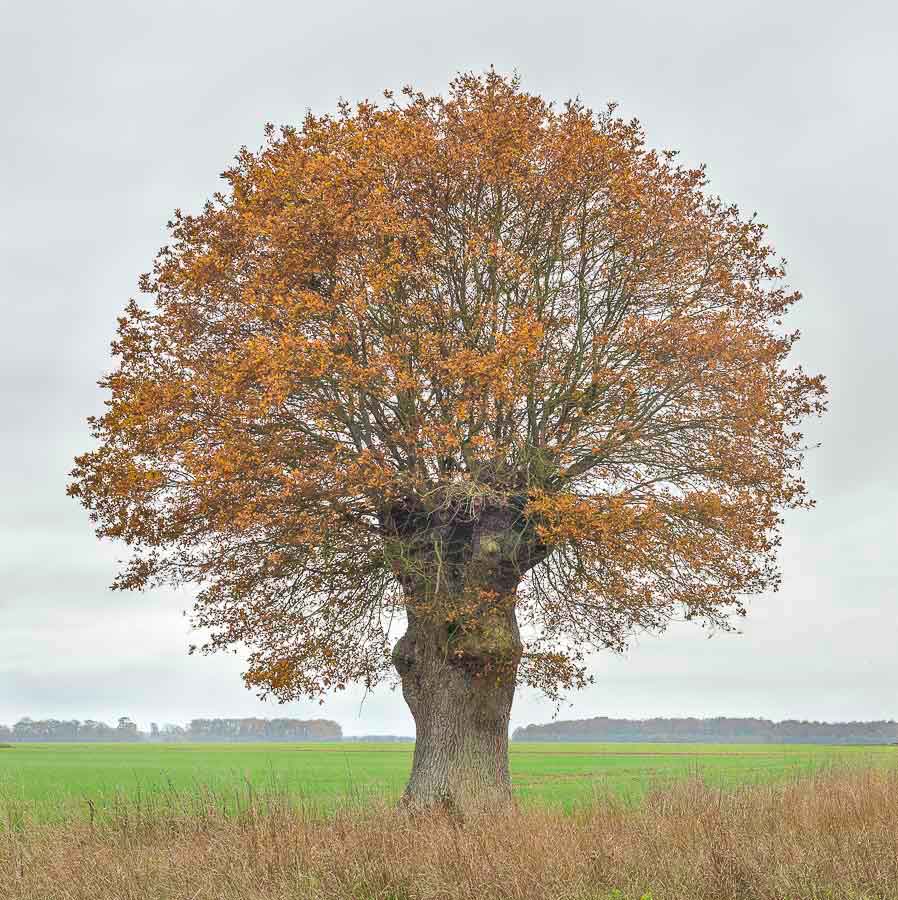
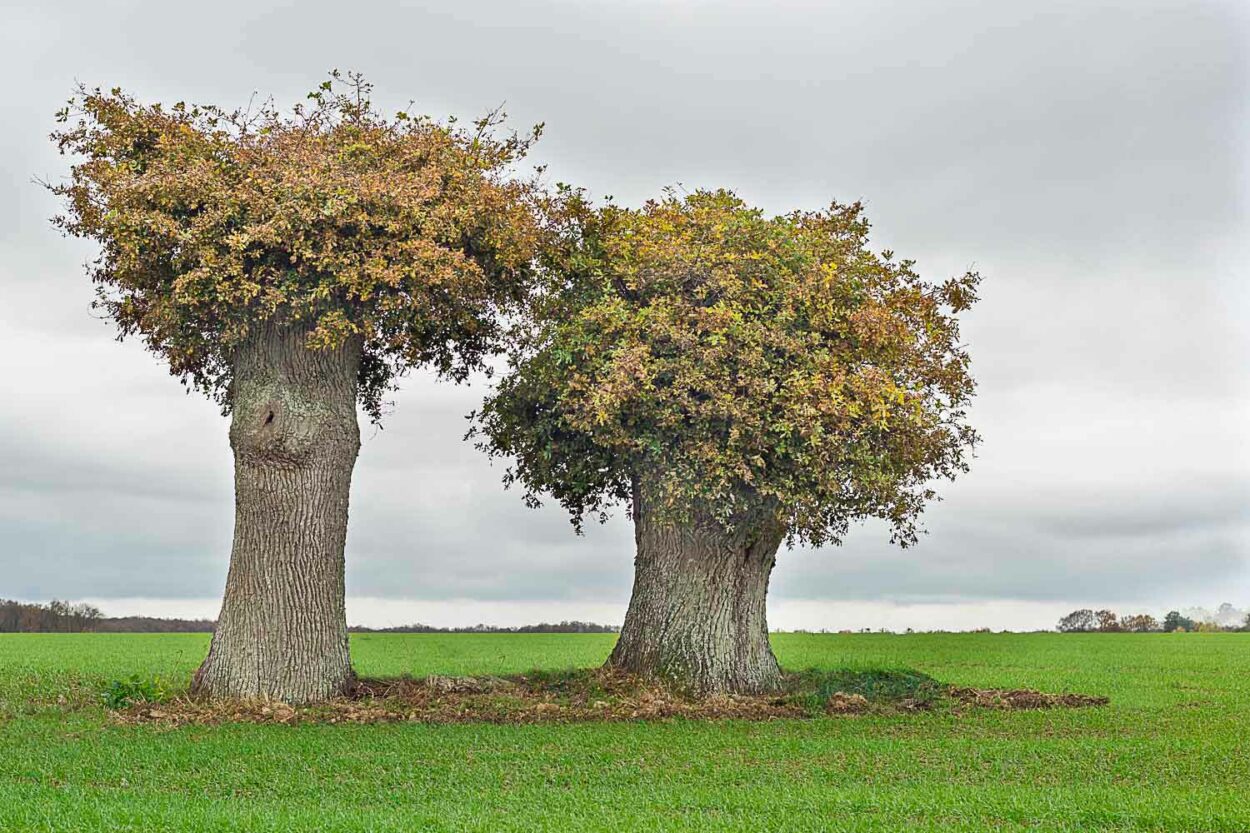
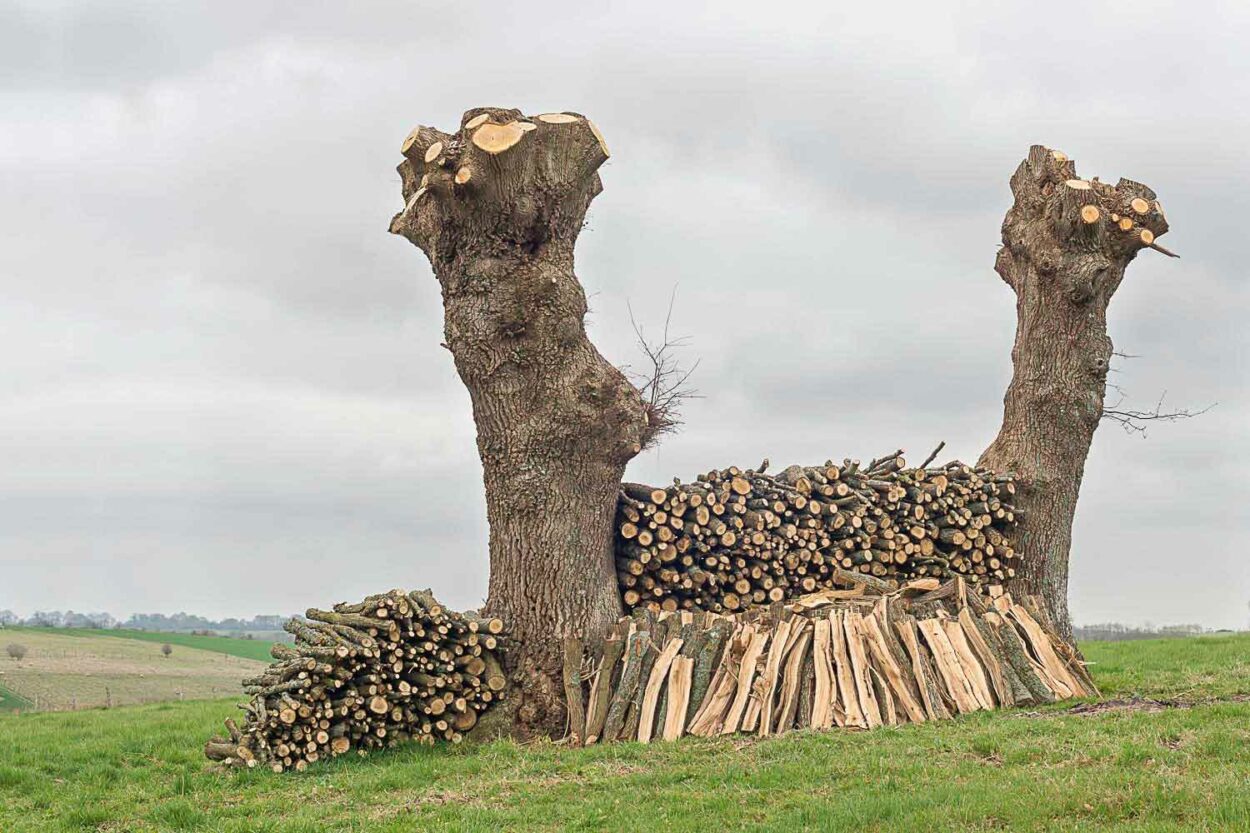
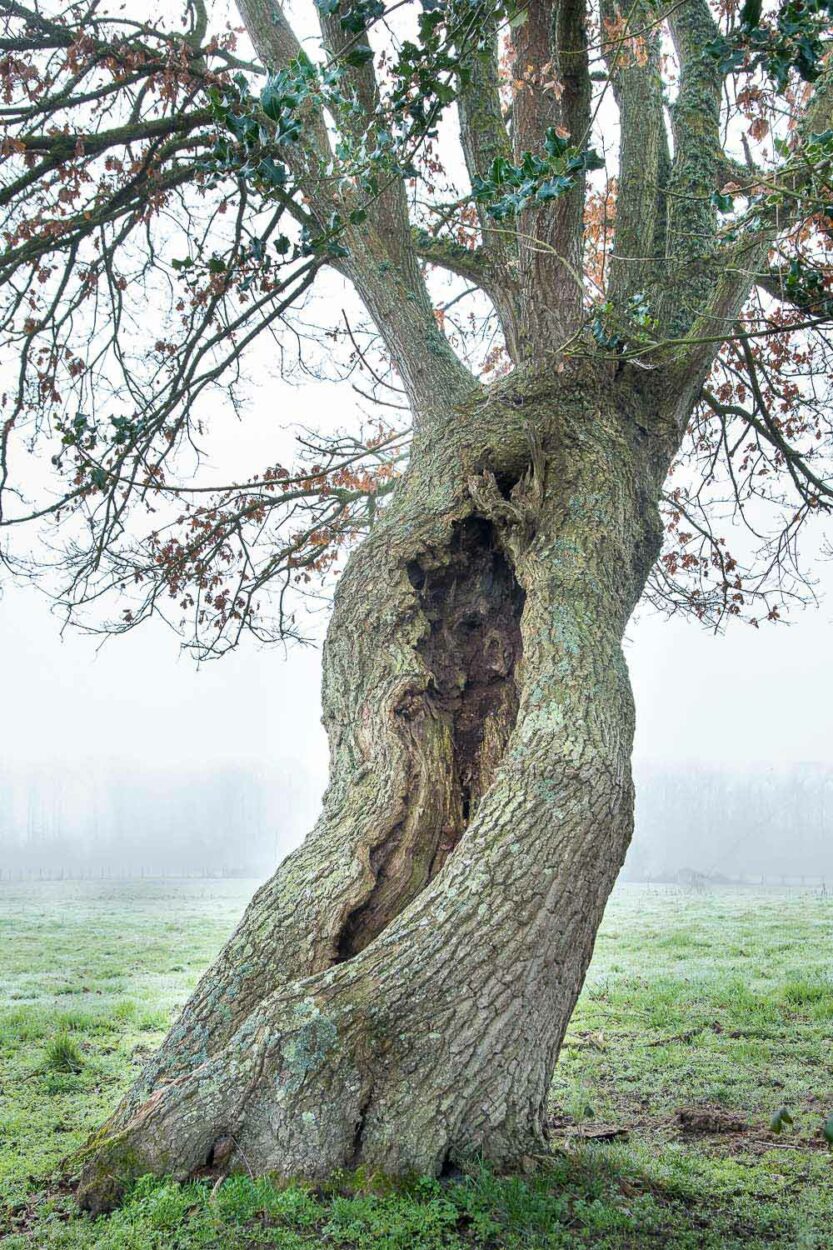
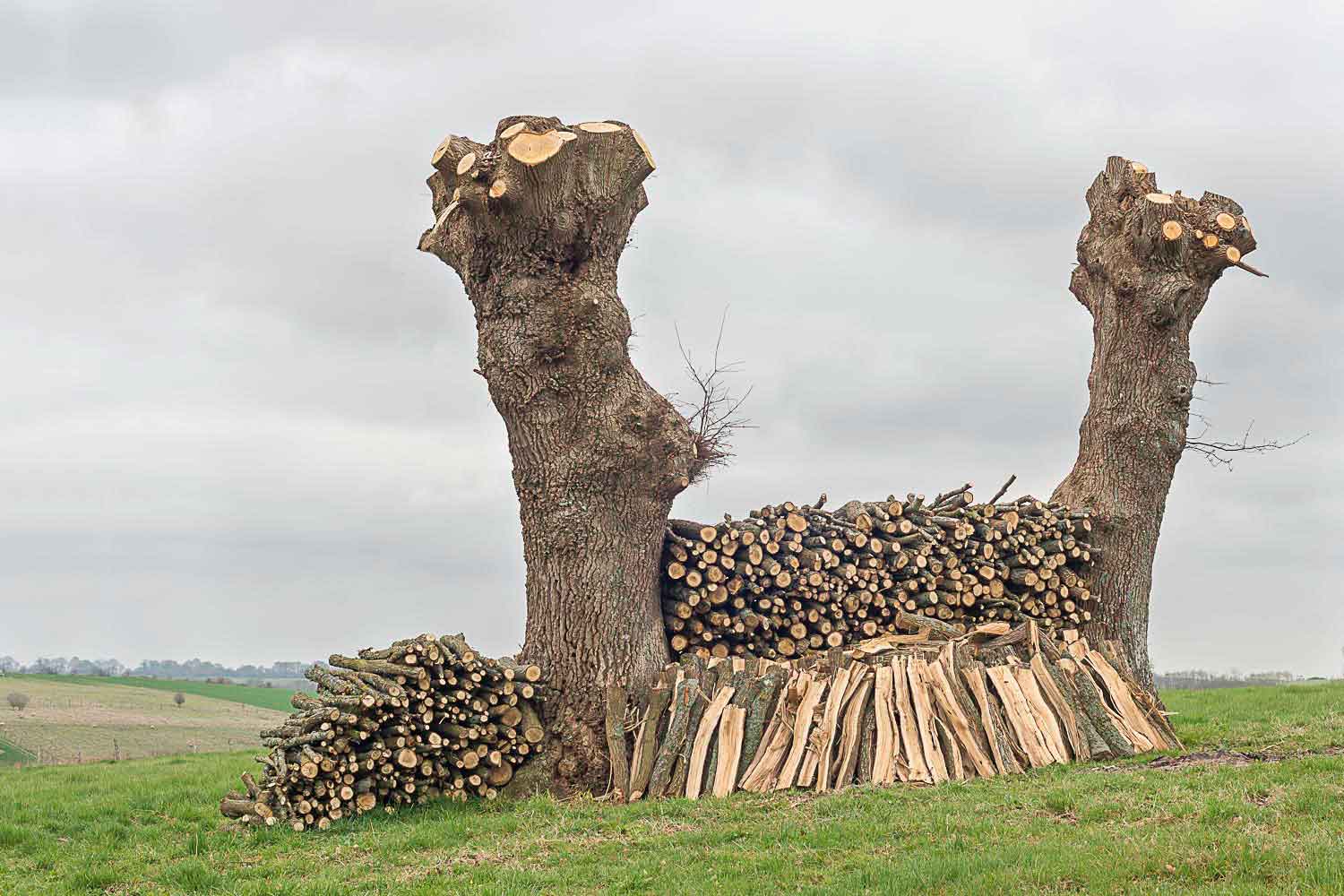
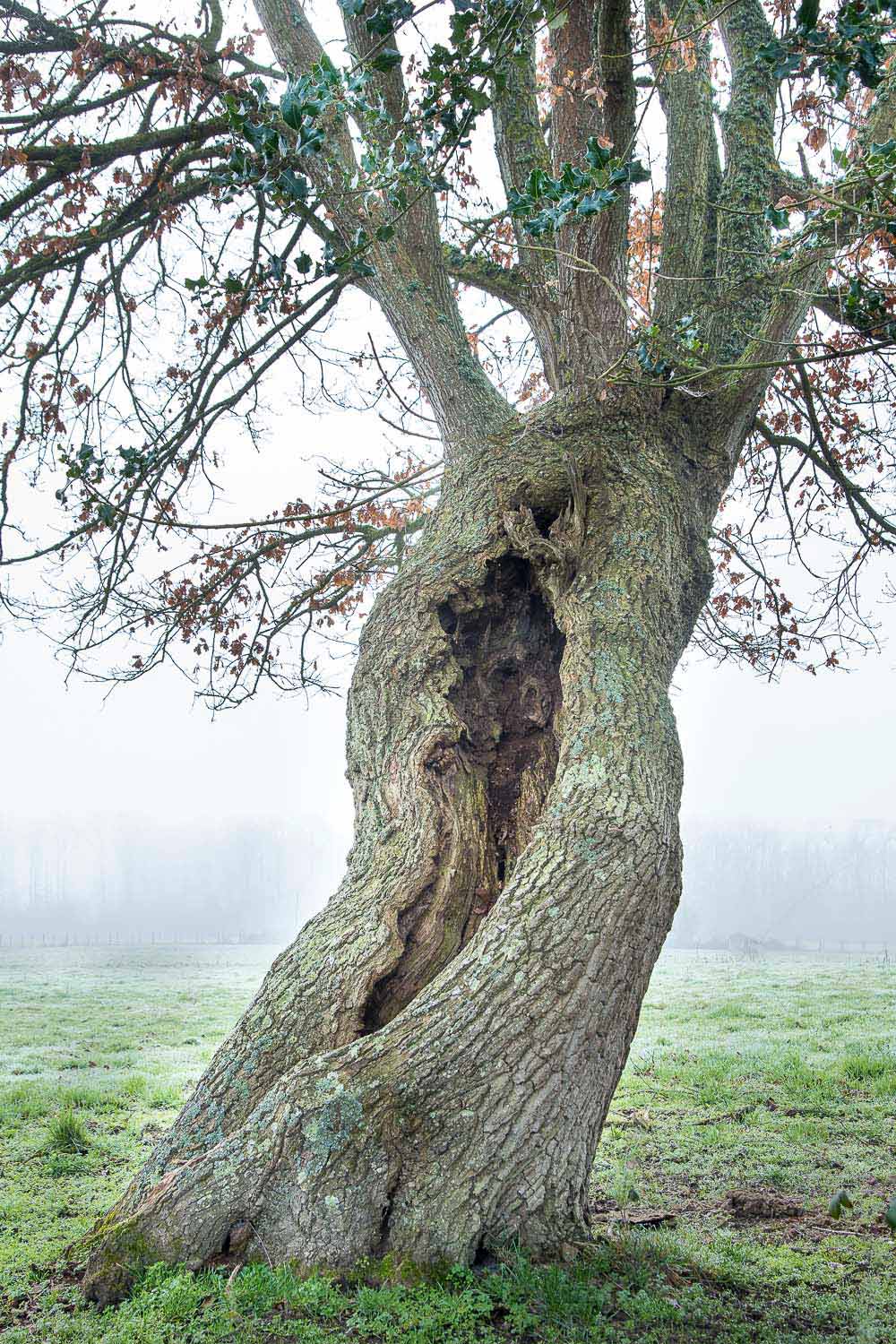
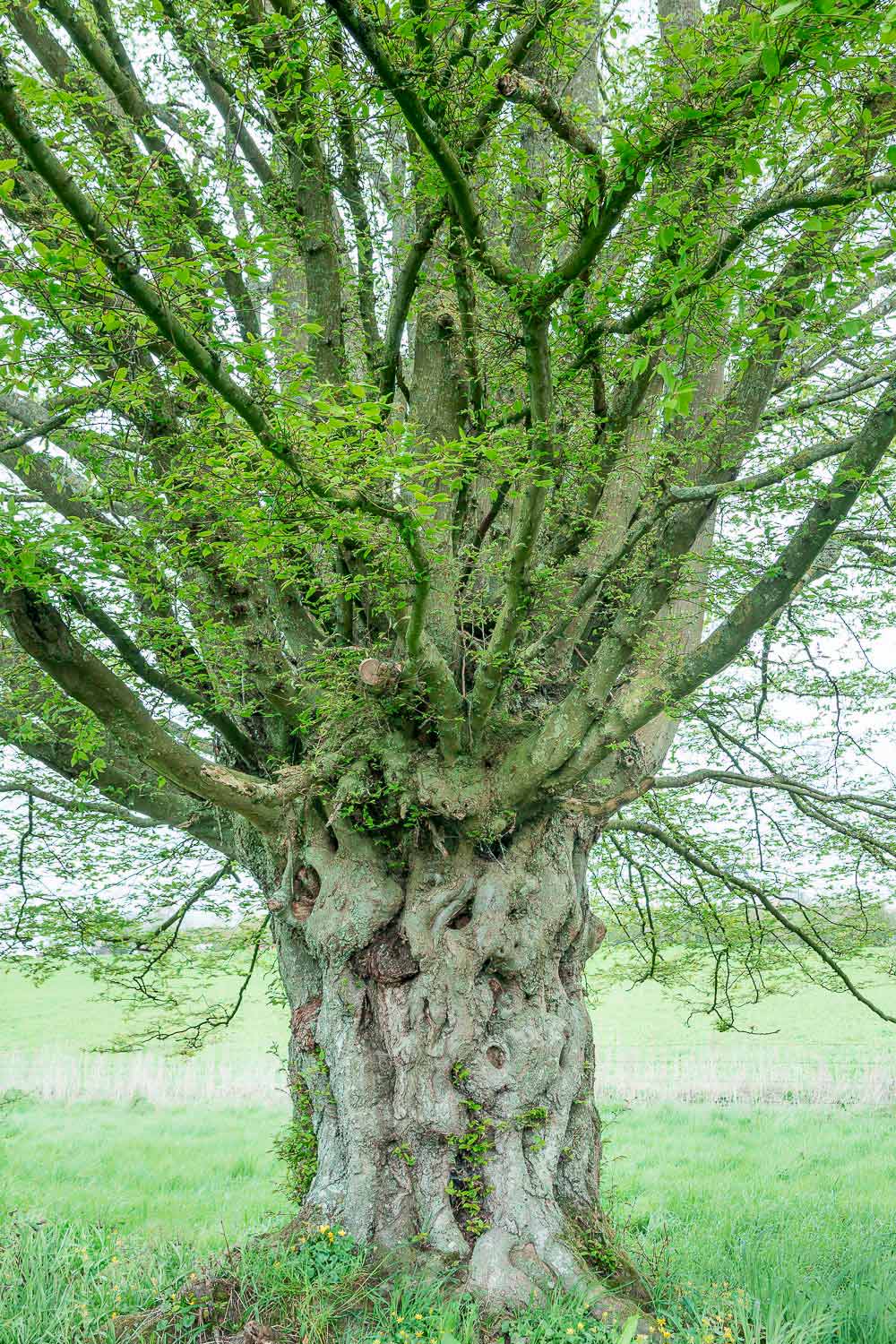
A trogne is the result of a specific intervention by man on a tree. When the tree is still young, its trunk is cut at a height generally between two and three metres. From this cut, shoots known as suckers develop. These new branches are then cut back regularly, approximately every seven or eight years. The tree can therefore continue to produce wood for centuries while remaining alive and continuing to grow. This practice, which dates back to Antiquity, gives these trees very distinctive shapes. Over time, their trunks become hollow and distorted, and develop numerous scars. Some of them can take on an almost disturbing or mysterious appearance.
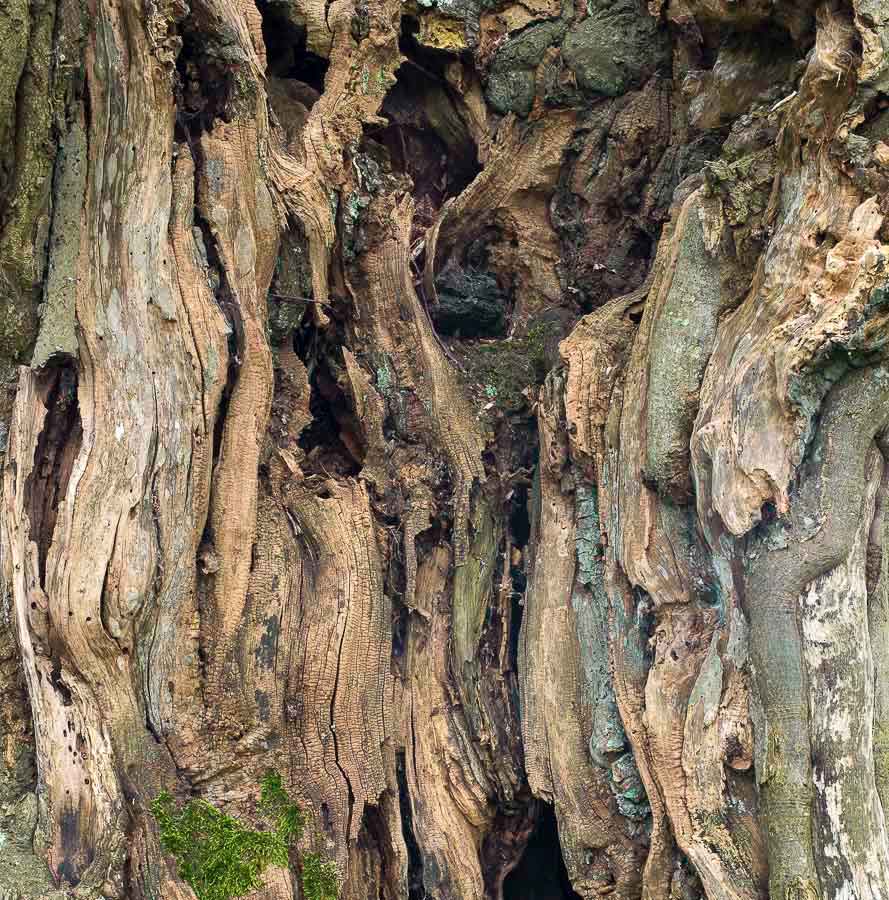
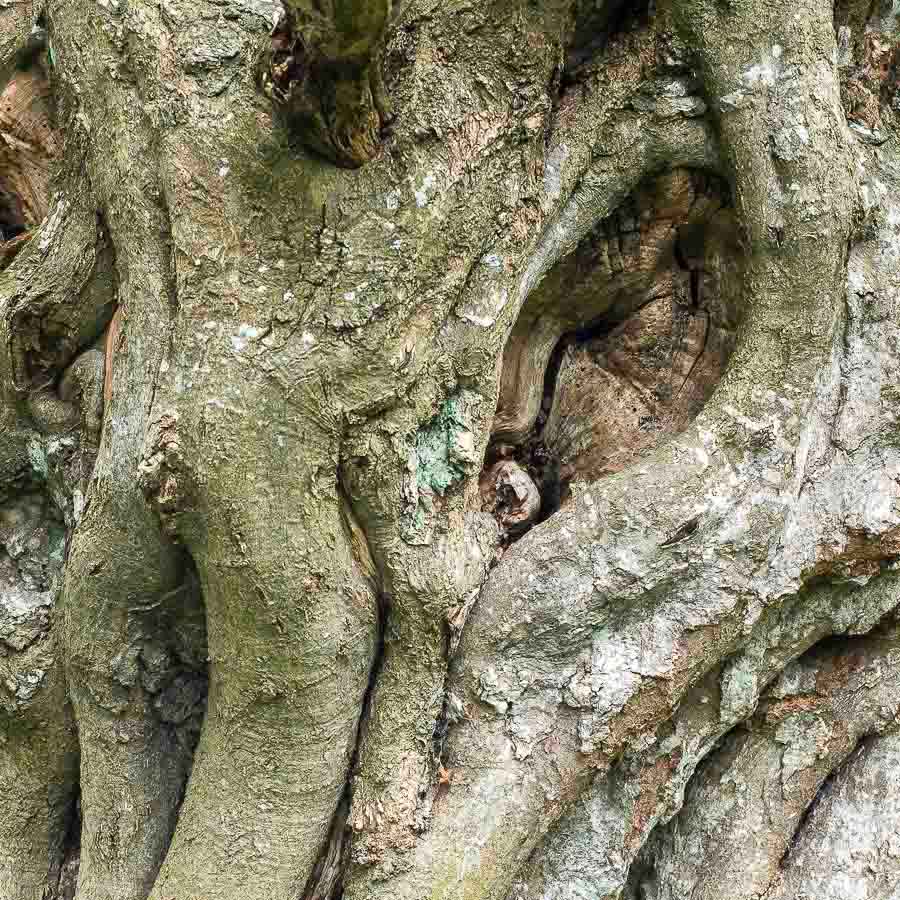
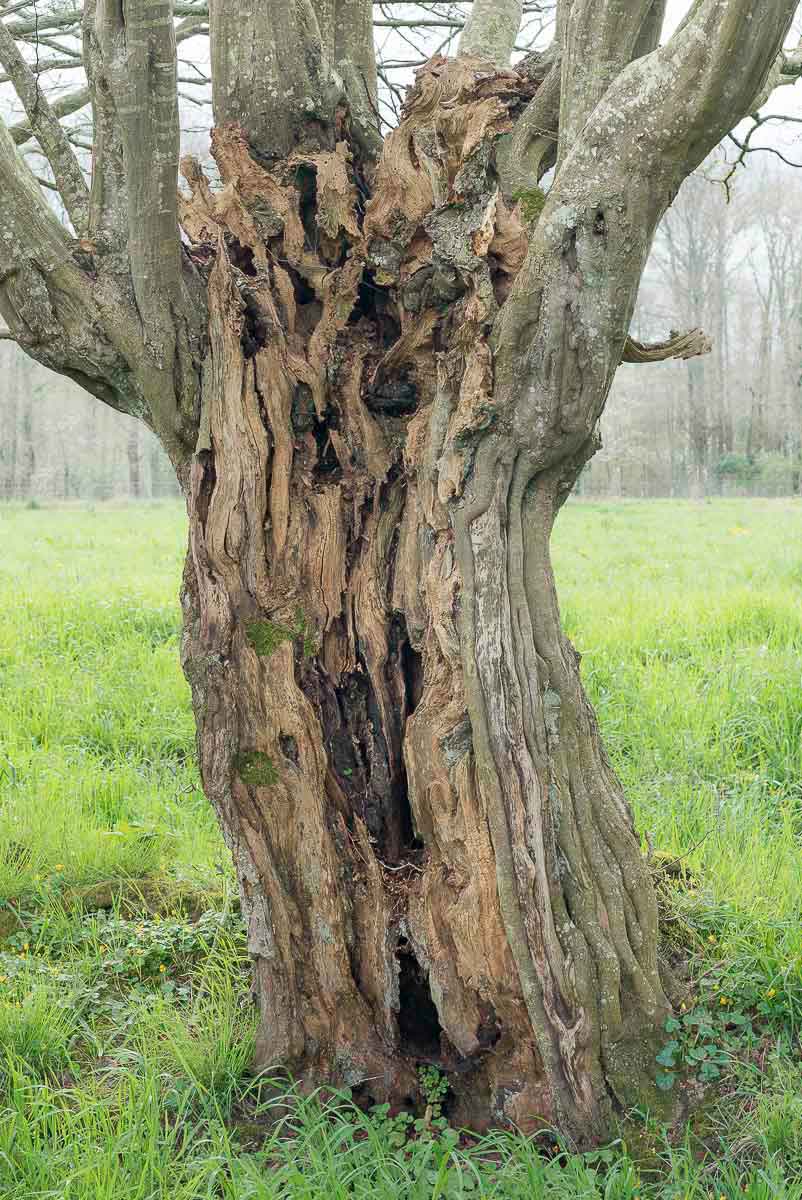
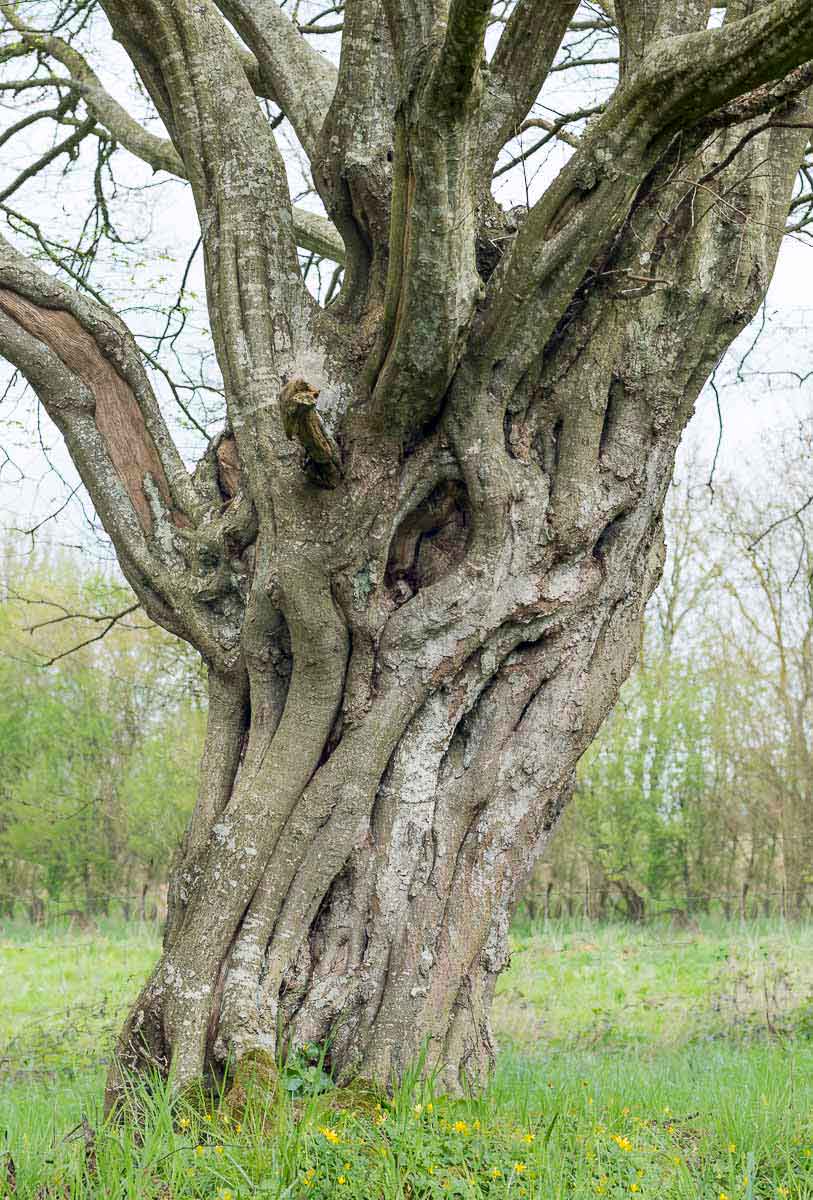
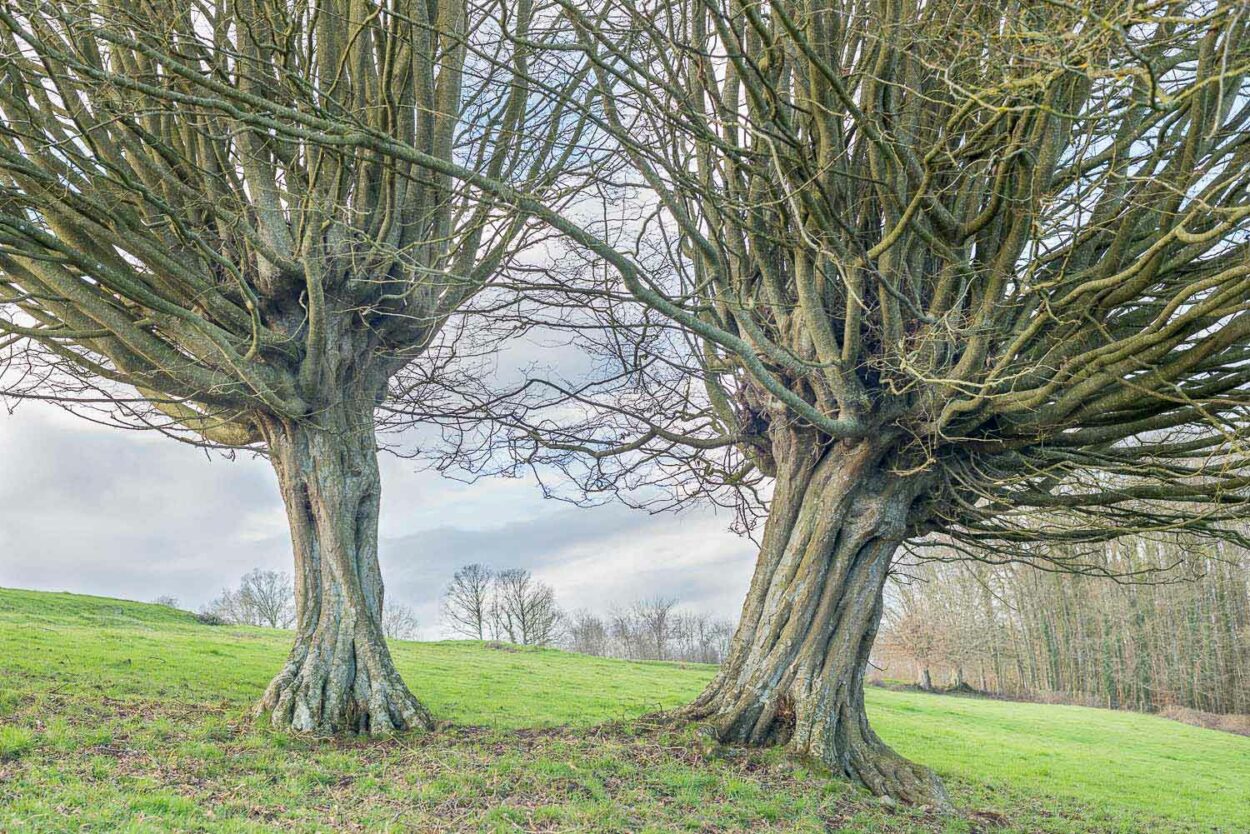
The trees presented in this article are approximately one to two centuries old. They are divided into two galleries, separated by this text. The first gallery presents pollarded oak trees. The second is devoted to pollarded hornbeam trees. But many other species can also be managed in this way: beech, plane trees, chestnut, poplar, willow, lime trees…
These trees, once very common in the countryside, are now less numerous. Yet they represent a remarkable part of our rural heritage, both natural and shaped by human hands. During your next journeys through the countryside, try to look differently at the trees along the roads, paths and fields. Perhaps, around a bend in the road, you will recognise one of these old trognes.
Some have been standing there for several generations, silent witnesses to an ancient practice and to a changing rural landscape.
It is possible to see these photos with their caption in full screen. To do this, click on one of the photos below and then on the small rectangle at the top right.